

Inside Out: Creating Seamless Flow Between Your Kitchen and Outdoors

Mood Makers: Choosing Colors That Spark Joy in Your Kitchen

When you’re planning a kitchen remodel, disaster-proofing shouldn’t be an afterthought – it’s vital for protecting your investment. You’ll want to start by understanding your region’s specific risks, from earthquakes to hurricanes, and then choose materials and designs accordingly. Consider water-resistant cabinetry, impact-resistant fixtures, and strategic storage solutions for emergency supplies. Your thoughtful planning today can mean the difference between minor inconvenience and major devastation when nature strikes.
Key Takeaways
- Install water-resistant materials like porcelain tile flooring and marine-grade plywood cabinets to prevent moisture damage during floods.
- Reinforce walls and add structural supports to protect against earthquakes and high winds during severe storms.
- Choose impact-resistant fixtures, including tempered glass windows and commercial-grade appliances, to withstand debris and natural forces.
- Create smart storage solutions with pull-out shelves and designated zones for emergency supplies and important documents.
- Select durable countertops like quartz composite that resist impacts, moisture, and heat while maintaining functionality.
Understanding Your Regional Disaster Risks

Before you can effectively disaster-proof your kitchen remodel, you’ll need to thoroughly assess the specific risks your region faces throughout the year. When I moved to my coastal home, I learned the hard way that different areas face vastly different regional hazards – from earthquakes and floods to hurricanes and tornadoes. Your local emergency management office can provide a detailed risk assessment that’ll help you understand what you’re up against.
I’ve found that checking historical weather patterns and disaster records helps paint a clearer picture of what your kitchen might face. For instance, if you’re in tornado alley, you’ll want different safety features than someone in a wildfire zone. By understanding these patterns, you’ll make renovation choices that protect not just your investment, but your family’s wellbeing too. Additionally, consulting with general contractors can ensure that your remodel meets local safety standards and regulations while addressing disaster risks effectively.
Structural Reinforcement Strategies
While planning my kitchen’s structural reinforcement, I discovered that even small changes can considerably boost your home’s disaster resilience. You’ll want to start by identifying your walls’ weakest points and implementing reinforcement techniques that strengthen these vulnerable areas. I’ve learned that strategic load-bearing modifications, like adding steel beams or reinforced columns, can dramatically improve your kitchen’s ability to withstand disasters.
Consider installing shear walls and moment frames, which help resist lateral forces during earthquakes or high winds. You’ll find that properly anchoring cabinets and appliances to reinforced walls isn’t just about safety – it’s about preserving your ability to serve others when they need you most. By incorporating diagonal bracing and structural connectors, you’re creating a space that protects both your family and your community. Additionally, engaging a design-build firm can enhance overall project management and collaborative decision-making throughout your remodel.
Water-Resistant Material Selection
Strong structural reinforcement means little if your materials can’t handle water damage. When you’re planning your kitchen remodel, selecting water-resistant materials isn’t just about protecting your investment – it’s about creating a space that’ll serve your family reliably through life’s unexpected moments. I’ve learned through experience that investing in waterproof countertops and moisture resistant cabinetry can make the difference between a minor spill and a major disaster. Additionally, embracing affordable materials can further enhance the durability of your remodel while keeping costs down.
| Material Type | Water-Resistant Option | Durability Rating | Cost Level |
|---|---|---|---|
| Countertops | Quartz Composite | Excellent | High |
| Flooring | Porcelain Tile | Superior | Medium |
| Cabinets | Marine-Grade Plywood | Very Good | High |
| Wall Protection | PVC Wainscoting | Good | Low |
Choose materials that match both your style and your need for durability, remembering that prevention is always less costly than repairs.
Smart Storage Solutions for Emergency Preparedness
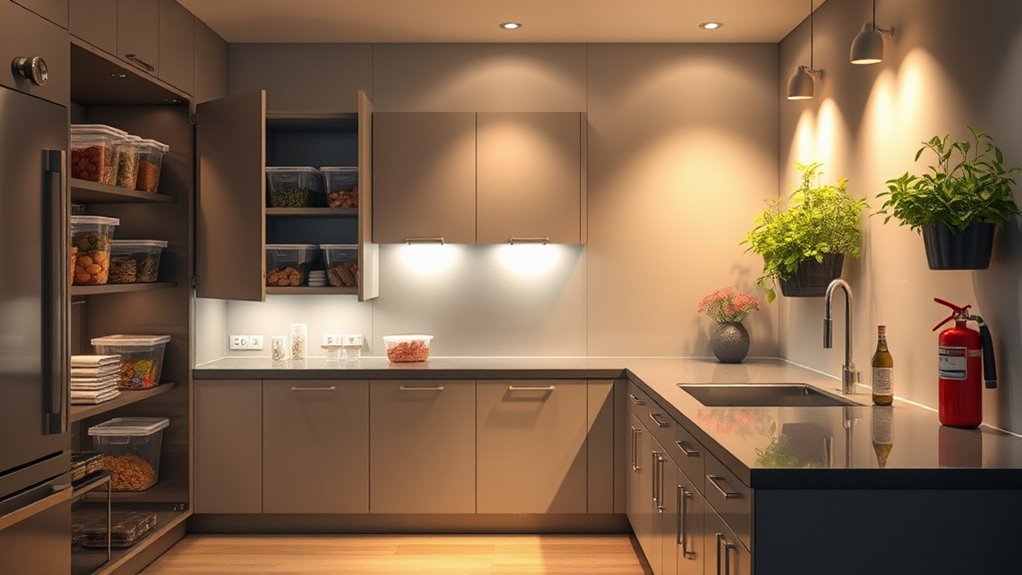
A well-organized kitchen isn’t just about daily convenience – it’s your first line of defense when emergencies strike. When you’re designing storage solutions, consider how you’ll protect and access crucial emergency supplies during power outages or natural disasters. Install pull-out shelving units that let you quickly inventory your food preservation supplies and rotate stored goods before they expire.
Create designated zones for emergency essentials – one near ground level for heavy items like water jugs, and another at eye level for first-aid supplies and battery-powered devices. Consider adding a hidden compartment beneath a seemingly ordinary cabinet panel, perfect for storing emergency documents and small valuables. You’ll feel more secure knowing that during challenging times, you’ve thoughtfully organized your kitchen to serve not just your family, but potentially your neighbors in need. Additionally, incorporating water-efficient fixtures can contribute to the overall sustainability of your home, making it a safe haven during emergencies.
Designing Backup Power and Utility Systems
Because power outages and utility failures can strike without warning, your kitchen’s backup systems deserve as much attention as its aesthetic design. When you’re helping others during emergencies, having reliable utility redundancy means you can continue providing meals and support to those in need. The peace of mind that comes from knowing you’ll stay operational during a crisis is invaluable. Incorporating energy-efficient appliances into your backup systems will enhance both sustainability and reliability during outages.
A resilient kitchen isn’t just about looks – it’s about maintaining the power to serve others when disaster strikes.
- Install a natural gas-powered backup generator with automatic transfer switch to keep essential appliances running, including your refrigerator, microwave, and select outlets.
- Set up a secondary water supply system with a pump and filtration unit to guarantee clean water access when municipal services fail.
- Include dedicated circuits and battery backup systems for critical lighting and communication devices, allowing you to coordinate assistance efforts even during extended outages.
Impact-Resistant Fixtures and Appliances
When disaster strikes, standard kitchen fixtures and appliances often prove inadequate against severe impacts, making your choice of impact-resistant components essential for a truly resilient space. You’ll want to select durable materials that can withstand both daily use and potential emergencies while maintaining energy efficiency. Additionally, opting for energy-efficient appliances not only enhances durability but also contributes to lower utility bills and a sustainable living environment.
| Component | Standard Option | Impact-Resistant Option | Key Benefit |
|---|---|---|---|
| Windows | Single-pane glass | Tempered/laminated glass | Shatter resistance |
| Cabinets | Particle board | Steel-reinforced hardwood | Structural integrity |
| Countertops | Ceramic tile | Quartz composite | Impact absorption |
| Appliances | Basic models | Commercial grade | Enhanced durability |
Frequently Asked Questions
How Long Does It Typically Take to Complete a Disaster-Proof Kitchen Renovation?
You’ll need to plan for 8-12 weeks to complete your kitchen renovation, with timeline expectations varying based on renovation phases, including demolition, structural reinforcement, installation, and final safety inspections.
What Insurance Benefits Can I Receive for Disaster-Proofing My Kitchen?
You’ll often receive reduced insurance premiums and better coverage when disaster-proofing your kitchen. Contact your insurer to understand specific benefits and start the claim process for potential reimbursements.
Can Disaster-Proofing Features Be Added to an Existing Kitchen Without Complete Remodeling?
You can add safety enhancements to your existing kitchen through targeted upgrades like reinforced cabinet anchors, water leak detectors, fire-resistant materials, and automatic shut-off valves for gas and water.
How Much More Expensive Is a Disaster-Proof Kitchen Compared to Standard Renovation?
You’ll need to budget 15-25% more for disaster-proofing features during your kitchen renovation. When cost comparing, remember that protecting your family’s safety brings long-term value beyond standard upgrades.
Are There Tax Incentives Available for Installing Disaster-Resistant Kitchen Features?
You can claim tax credits for energy-efficient appliances and disaster-resistant improvements. Many states offer additional incentives when you upgrade your kitchen to protect both your home and community.
Conclusion
You’ve taken important steps to create a kitchen that’s both beautiful and resilient. By considering your region’s risks, reinforcing structures, choosing durable materials, and planning for emergencies, you’re protecting your investment and your family’s safety. Remember, a disaster-proof kitchen isn’t just about surviving – it’s about maintaining a sense of normalcy when challenges arise. Your thoughtful preparations today will bring peace of mind for years to come.