

Kitchen Remodel Company

Comprehensive Guide to Bathroom Remodeling Ideas

You’ll find that your kitchen floor choice can transform your cooking space into a harmonious blend of style and functionality. Today’s options range from classic hardwood’s timeless appeal to porcelain tile’s durability and vinyl’s practical elegance. Each material offers unique benefits, from water resistance to easy maintenance, letting you match your lifestyle needs with your design dreams. The perfect kitchen floor awaits as you explore these versatile possibilities.
Key Takeaways
- Porcelain and ceramic tiles offer exceptional durability and moisture resistance, making them ideal for high-traffic kitchens with frequent spills.
- Hardwood flooring provides timeless beauty and can be refinished multiple times, though it requires prompt cleaning of water spills.
- Luxury vinyl tile combines style with practicality, offering waterproof properties and resistance to daily wear in busy kitchens.
- Sustainable materials like bamboo and cork are trending options that balance environmental consciousness with durability and style.
- Proper maintenance and appropriate cleaning products significantly extend the life of any kitchen flooring material while preserving its appearance.
Key Factors to Consider When Choosing Kitchen Flooring
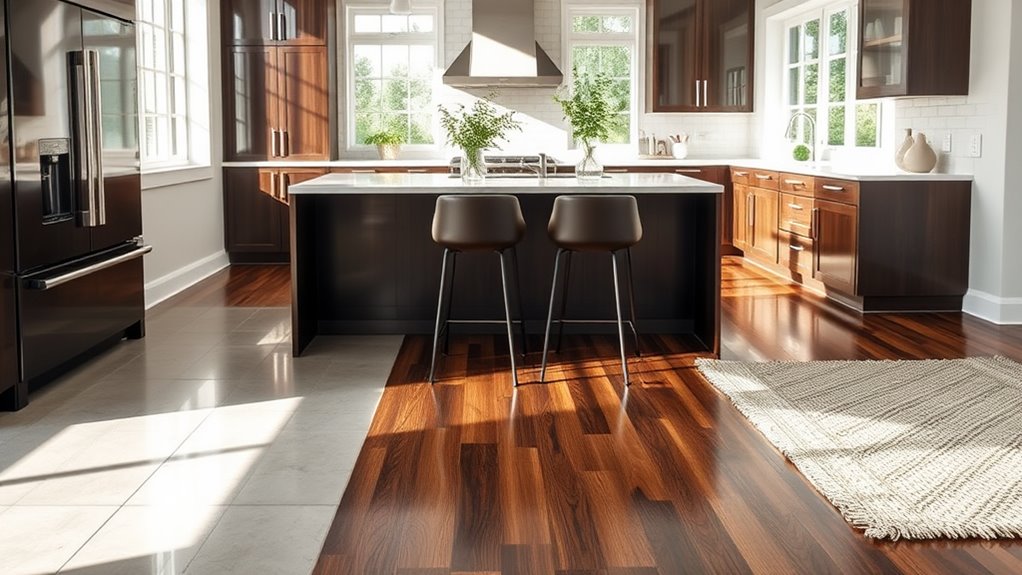
When you’re standing in your kitchen, contemplating a flooring upgrade, it’s easy to feel overwhelmed by the countless options available. Your kitchen holds countless memories of family gatherings and shared meals, making this decision particularly meaningful for your home’s heart.
As you consider your choices, remember that kitchen traffic will test your flooring daily. From children racing through with muddy feet to spills during holiday cooking sessions, your floor needs to withstand life’s beautiful chaos. Moisture resistance becomes essential when you’re dealing with sauce splatters and ice maker leaks, protecting not just the surface but the foundation of your gathering space. Think about how each option will serve your family’s unique rhythm while maintaining its beauty through years of creating memories together. Additionally, selecting high standards for quality workmanship in your flooring choice ensures that it will endure the test of time.
Porcelain and Ceramic Tile Options for Kitchen Spaces
Among the most enduring and versatile kitchen flooring choices, porcelain and ceramic tiles have earned their place in countless homes through generations of reliable service. You’ll find these tiles elevate your kitchen’s appearance while standing up to daily wear and tear, making them perfect for spaces where you love to gather and create memories with family.
Whether you’re drawn to glossy finishes that reflect light and add sophistication, or textured surfaces that provide better traction when you’re moving between sink and stove, there’s a tile that matches your needs. When you choose porcelain, you’re getting a denser, more moisture-resistant option, while ceramic offers greater color variety and often comes at a gentler price point. Both options let you express your style while providing the durability your busy kitchen demands. Additionally, assessing durability and maintenance will help you choose the right tile that can withstand the high-traffic conditions typical in kitchen areas.
Pros and Cons of Hardwood Flooring in Kitchens
Natural hardwood flooring beckons homeowners with its timeless beauty and inherent ability to make any kitchen feel like the heart of a welcoming home. You’ll discover that hardwood durability varies depending on the species you choose, with oak and maple proving especially resilient for busy kitchens where families gather.
While the aesthetic appeal of hardwood creates an inviting atmosphere that seamlessly connects your kitchen to adjacent living spaces, you’ll need to take into account some drawbacks. Water spills, if not quickly wiped up, can warp or stain your floors. You’ll also notice that dropped pots and regular foot traffic may dent softer woods over time. However, unlike other flooring options, hardwood’s unique advantage lies in its ability to be refinished multiple times, allowing you to restore its beauty even after years of loving use. Additionally, opting for quality materials can enhance the longevity and overall enjoyment of your flooring choice.
Vinyl and LVT Solutions for Modern Kitchens

Today’s vinyl and luxury vinyl tile (LVT) options have revolutionized kitchen flooring, offering homeowners an impressive blend of durability and style that you wouldn’t have imagined possible a decade ago. You’ll find these waterproof options available in stunning wood-look planks and stone-inspired tiles that can transform your kitchen while being gentle on your budget.
As you explore luxury vinyl solutions for your kitchen, you’ll discover how these materials stand up beautifully to spills, drops, and daily wear. They’re warm underfoot and quieter than traditional hard surfaces, creating a welcoming atmosphere for family gatherings and meal preparation. The cushioned backing helps reduce fatigue while you’re cooking, and the easy-care surface lets you focus on what matters most – creating memorable moments with loved ones in your kitchen sanctuary. Additionally, consider energy-efficient upgrades that can further enhance the overall appeal and functionality of your space.
Natural Stone: From Granite to Marble Kitchen Floors
While modern synthetics offer practicality, the timeless allure of stone flooring brings an unmatched elegance to your kitchen sanctuary. When you’re choosing between granite and marble, you’ll discover that each stone carries its own unique personality and purpose. Granite advantages include exceptional durability and resistance to heat, making it perfect for busy families who love gathering in the kitchen to create memories together.
Marble aesthetics offer a softer, more romantic appeal that transforms your kitchen into an artistic canvas. As you run your fingers across its cool, smooth surface, you’ll feel connected to centuries of culinary tradition. Though marble requires more careful maintenance, its ethereal veining and luminous presence create an atmosphere that inspires both creativity and conversation, turning every meal preparation into a moment of beauty. Additionally, incorporating sustainable materials like these stone options can significantly enhance your home’s environmental footprint.
Budget-Friendly Kitchen Flooring Alternatives
Dreaming of a stunning kitchen floor doesn’t mean you’ll need to empty your savings account or take out a second mortgage. Today’s budget-friendly options offer both style and durability, letting you create a welcoming space where family and friends can gather comfortably.
Consider these affordable yet attractive alternatives that’ll transform your kitchen:
- Laminate flooring options that perfectly mimic hardwood or stone, offering water resistance and easy maintenance at a fraction of the cost.
- Resilient vinyl planks featuring realistic textures and patterns, standing up beautifully to heavy foot traffic and occasional spills.
- Cork flooring benefits that include natural cushioning under your feet, sound absorption, and antimicrobial properties – all while being environmentally sustainable.
Incorporating durable materials not only enhances the overall aesthetic but also ensures a long-lasting floor that withstands daily use.
You’ll love how these budget-conscious choices help create a kitchen that feels both inviting and practical.
Maintenance and Care Tips for Different Kitchen Floors

Making smart flooring choices matters, but knowing how to care for your kitchen floor properly will keep it looking beautiful for years to come. As someone who’s learned through trial and error, I’ve discovered that each flooring type demands its own unique cleaning techniques and surface protection methods. Whether you’re dealing with delicate hardwood that needs gentle cleansers and swift spill cleanup, or resilient vinyl that withstands more robust cleaning approaches, understanding your floor’s specific needs makes all the difference.
I’ve found that consistent maintenance creates a welcoming space where family and friends gather comfortably. You’ll want to establish a regular cleaning routine, use appropriate cleaning products, and place protective pads under furniture legs. Additionally, considering expert recommendations for specific flooring care can enhance the longevity and appearance of your kitchen floor. Remember, your kitchen floor isn’t just a surface – it’s the foundation of countless memorable moments shared with loved ones.
Latest Kitchen Flooring Trends and Design Ideas
Today’s kitchen flooring trends reflect our evolving relationship with home design and functionality. When you’re choosing new flooring, you’ll notice sustainable materials taking center stage, from reclaimed wood to bamboo and cork options that bring warmth and eco-consciousness to your space.
The latest color trends embrace:
- Earth-inspired neutrals that create a calming atmosphere, perfect for gathering with loved ones
- Bold geometric patterns that transform floors into artistic statements
- Two-tone designs that blend different materials, like wood and tile, for unique transitions between spaces
You’ll find yourself drawn to these innovative approaches that not only make your kitchen more inviting but also tell a story about your commitment to both style and environmental responsibility. Incorporating durable materials ensures that your flooring can withstand heavy foot traffic and spills, maintaining both its aesthetic appeal and practicality. These choices reflect a deeper understanding of how our homes shape our daily experiences.
Frequently Asked Questions
Can Kitchen Flooring Be Installed Over Existing Tile Without Removing It?
You can install new flooring over existing tile if it’s level and secure. However, you’ll need to take into account proper tile installation techniques and flooring options to guarantee a successful overlay project.
How Long Does It Typically Take to Install New Kitchen Flooring?
You’ll need 1-3 days for a typical kitchen flooring installation timeline. The exact duration depends on your room size, flooring type, and necessary preparation work before laying new materials.
What’s the Best Flooring Option for Homes With Elderly Residents?
You’ll want cork or vinyl flooring for elderly residents, as they offer excellent slip resistance and superior comfort level while walking. They’re also forgiving if someone falls.
Should Kitchen Flooring Match the Rest of the House?
While you don’t need to match exactly, maintaining a cohesive design through color coordination creates visual flow throughout your home. You’ll want complementary flooring that blends with adjacent spaces.
Can Radiant Floor Heating Be Installed Under All Types of Kitchen Flooring?
You’ll find most flooring materials work with radiant heat, but you’ll need to check specific compatibility. Tile and stone are ideal, while solid hardwood and some laminates require careful consideration for thermal expansion.
Conclusion
When you’re choosing your kitchen flooring, you’ll want to carefully weigh your lifestyle needs against your design preferences. Whether you’ve fallen in love with the warmth of hardwood, the durability of porcelain, or the affordability of vinyl, there’s a perfect solution for your space. Remember, your kitchen floor isn’t just a surface – it’s the foundation of countless family meals, celebrations, and everyday moments that’ll shape your home’s story.