

Kitchen Remodeling: Kick Off Your Dream Kitchen Upgrade Today

Color Trends for Kitchens: What’s Hot for 2025

You’ll need to create a temporary kitchen setup with essential appliances like hot plates, microwaves, and slow cookers to maintain some normalcy during renovation. Plan simple meals that don’t require extensive cooking, and organize a makeshift pantry space using clear containers and labels. Focus on containing construction dust with plastic barriers and HEPA filters, while maintaining a positive mindset through the chaos. Your patience and adaptability will reveal the lasting rewards of your kitchen transformation.
Key Takeaways
- Set up a functional temporary kitchen with essential appliances and organized zones for food prep and storage.
- Create a simplified meal plan focused on no-cook options and easy-to-prepare dishes using minimal equipment.
- Contain construction mess by using plastic barriers and HEPA filters, maintaining a daily cleaning routine.
- Stay organized with clear storage containers and labels, keeping frequently used items easily accessible.
- Maintain a positive mindset by tracking renovation progress and celebrating small victories throughout the process.
Plan Your Temporary Kitchen Setup

Before demolition day arrives, setting up a functional temporary kitchen will be your lifeline during the renovation chaos. You’ll want to carve out a dedicated space – perhaps in your dining room or garage – where you can maintain some semblance of normal meal preparation. Think about how you’ll serve your family’s needs during this changeover.
Create zones for temporary storage, keeping everyday essentials within easy reach. You’ll need a sturdy table for food prep, shelving for pantry items, and a designated spot for your alternative cooking methods. Consider investing in versatile appliances like an electric hot plate, microwave, or slow cooker – they’ll become your trusted companions. Don’t forget to set up a washing station with a large basin and dish rack. Remember, this temporary setup isn’t just about survival; it’s about maintaining your ability to nourish those you love. Having a comprehensive project guide will assist you in organizing this interim setup effectively.
Essential Appliances to Keep Within Reach
When you’re living through a kitchen renovation, the right portable appliances can mean the difference between enjoying home-cooked meals and surviving on takeout. As you pack away your regular kitchen essentials, carefully select the small appliances that’ll help you maintain a sense of normalcy during this challenging change. Consider keeping a microwave, electric kettle, and slow cooker within easy reach—these versatile tools will become your daily companions.
If space allows, add a compact toaster oven and portable induction burner to your temporary setup. These essential appliances will expand your cooking possibilities, letting you create comforting meals that bring your family together, even when your kitchen is in disarray. Remember, maintaining the ability to prepare simple, nourishing food isn’t just about sustenance—it’s about preserving the heart of your home during renovation. Additionally, having access to skilled workers can also assist in minimizing disruptions and ensuring a smoother renovation process.
Smart Meal Planning During Construction
Successful meal planning during a kitchen renovation requires a delicate balance of creativity and practicality. You’ll need to think differently about how you prepare meals for your family, embracing simpler approaches that don’t require a full kitchen setup.
| Meal Type | Quick Recipe Ideas | No Cook Meals |
|---|---|---|
| Breakfast | Instant oatmeal cups | Overnight oats |
| Lunch | Microwave burritos | Deli sandwiches |
| Dinner | Crockpot stews | Fresh salads |
| Snacks | Trail mix | Fresh fruit |
Consider your family’s dietary needs and create a weekly menu that relies on your temporary cooking setup. Stock up on ingredients that don’t require refrigeration, and embrace the simplicity of no-cook meals when possible. You’ll discover that even without a fully functioning kitchen, you can still nourish your loved ones with thoughtful planning and adaptable meal strategies. Keep in mind that successful renovations can significantly improve your kitchen’s overall appearance and functionality.
Organizing Your Makeshift Pantry Space

Creating a temporary pantry during your kitchen renovation can feel like solving a complex puzzle, but the right organizational approach will make this challenging shift much smoother. Start by designating a specific area in your home – perhaps a spare closet or shelving unit – where you’ll establish your pantry storage system. Sort your items by frequency of use, keeping everyday essentials within easy reach.
Clear storage containers with labels will transform your makeshift space into a functional food organization hub. You’ll find comfort in knowing exactly where everything is, even during the chaos of construction. Consider this temporary setup an opportunity to declutter and reassess your pantry needs. When you stack containers vertically and use drawer organizers, you’ll discover that even a small space can serve your family’s needs efficiently. Additionally, this process may lead you to uncover budgeting tips that can help streamline your kitchen renovation costs.
Cleaning and Dishwashing Solutions
The challenge of keeping dishes clean during a kitchen renovation tests even the most resourceful homeowner’s patience. You’ll need to create a temporary dishwashing station that won’t disrupt your daily routine or compromise your family’s comfort. Consider setting up near a bathroom or laundry room sink, where you’ll have access to running water and proper drainage.
Among the most valuable dishwashing tips I’ve discovered is using large plastic bins – one for washing and another for rinsing. You can also embrace cleaning hacks like using paper plates for easier meals and keeping a spray bottle filled with vinegar solution nearby for quick wipe-downs. Remember to place a thick mat under your washing station to protect floors from water damage, and keep a designated drying rack within arm’s reach. To enhance your day-to-day comfort during the renovation, consider integrating smart technology into your kitchen plans for improved efficiency in the long run.
Managing Dust and Construction Debris
When construction dust starts infiltrating every corner of your home during a kitchen renovation, you’ll quickly realize why protective barriers aren’t just optional – they’re essential for your sanity and health. Implementing effective dust containment strategies isn’t just about hanging plastic sheets; it’s about creating an all-encompassing system that protects your living space while allowing work to continue efficiently. Your home’s air quality and cleanliness depend on proper debris disposal methods that keep hazardous particles from spreading.
- Seal off the construction zone with heavy-duty plastic sheeting and painter’s tape, creating a tight airlock system
- Place sticky mats at entry points to catch debris from workers’ boots
- Run HEPA air purifiers in adjacent rooms to filter escaped dust particles
- Set up a dedicated cleanup station with vacuum, broom, and disposal bags for daily maintenance
- Additionally, using low VOC paints in your kitchen remodel can improve indoor air quality and reduce harmful emissions during the renovation process.
Maintaining Family Routines and Schedules
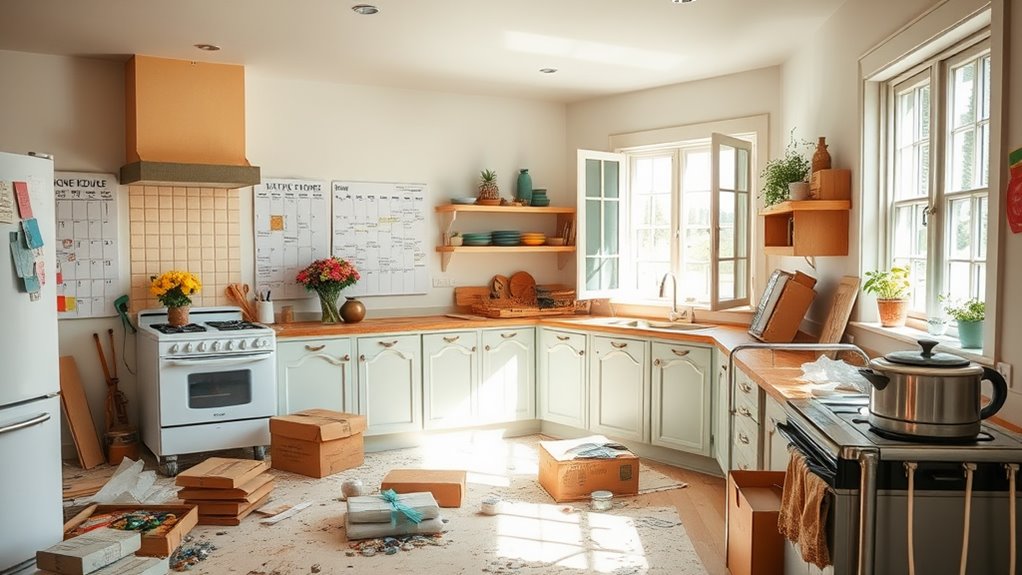
Although your daily routine might feel like it’s crumbling alongside your old kitchen cabinets, maintaining family stability during a renovation isn’t impossible. You’ll need to create new rhythms that accommodate both construction chaos and your loved ones’ needs. Consider designating alternative spaces for family activities, like transforming your dining room into a temporary homework station or setting up a cozy breakfast nook in the living room.
Making thoughtful routine adjustments can help preserve precious family moments. Set specific times for meals, even if they’re simpler than usual, and maintain bedtime rituals that provide comfort amid change. Remember that while your kitchen’s transformation may feel overwhelming, it’s also an opportunity to demonstrate resilience and adaptability to your children, teaching them valuable life lessons through this shared experience. Emphasizing the importance of customizing living spaces can also encourage creativity in finding new ways to connect as a family during this transitional period.
Budget-Friendly Dining Alternatives
Living without a functional kitchen doesn’t mean you’re destined for expensive takeout every night. With thoughtful planning and creativity, you’ll find plenty of budget-conscious ways to feed your family during renovation chaos. By exploring different meal strategies and thinking outside the traditional dining box, you can keep costs manageable while maintaining healthy eating habits.
Smart meal planning and creative thinking can help you navigate kitchen-free living without breaking the bank or sacrificing nutrition.
- Create a temporary food station with a microwave, mini-fridge, and electric kettle for simple meal prep.
- Explore affordable takeout options by joining restaurant loyalty programs and watching for daily specials.
- Pack picnic meals using a cooler and enjoy dining in parks or your backyard.
- Plan “build-your-own” sandwich nights using fresh ingredients from the grocery store’s deli section.
- Remember that planning a renovation maintains home value and can lead to smart meal solutions that suit your budget.
Staying Positive Through the Process
How can you maintain your sanity when your kitchen feels like a construction zone with no end in sight? It’s crucial to cultivate a positive mindset, even when you’re surrounded by dust and chaos. Start each morning with daily affirmations, reminding yourself that this disruption is temporary and will lead to a beautiful space where you’ll create countless memories.
Focus on the small victories: celebrate when the cabinets arrive, rejoice as each tile gets placed, and picture the wonderful meals you’ll prepare once it’s complete. Keep a renovation journal to track progress, including before-and-after photos that’ll remind you how far you’ve come. When frustration builds, take a deep breath and remember that your patience now will transform into years of joy in your new kitchen. Additionally, understanding the importance of layout optimization can significantly enhance your kitchen’s functionality, making the renovation worth the wait.
Frequently Asked Questions
How Do I Keep My Pets Safe During a Kitchen Renovation?
Keep your pets in a secure room away from construction zones, minimize renovation stress by maintaining their routine, and guarantee contractors know about your pets’ presence for everyone’s safety.
Should I Change My Home Insurance Coverage During Kitchen Renovations?
You’ll want to notify your insurer and review insurance adjustments during renovations. Consider expanding coverage options to protect against construction-related risks, contractor accidents, and potential damage to your home’s new features.
What Permits Do I Need Before Starting My Kitchen Renovation?
You’ll need to check local building codes and submit a permit application for structural changes, electrical work, plumbing modifications, and ventilation updates. Contact your city’s building department for specific requirements.
Can I Stay in My House During a Complete Kitchen Remodel?
You can stay home during a kitchen remodel, but you’ll need proper kitchen logistics planning and noise management strategies. Set up a temporary cooking station and establish quiet hours with contractors.
How Do I Protect My Floors From Construction Traffic Damage?
You’ll need to lay down protective coverings like Ram Board, rosin paper, or plywood over your flooring options. Secure them with painter’s tape and create designated pathways for workers to follow.
Conclusion
You’ll emerge from your kitchen renovation with more than just a beautiful new space – you’ll have gained valuable life lessons in patience, adaptability, and resilience. The temporary inconveniences and dusty chaos will fade, but the memories of how you and your family pulled together during this challenging time will remain. Trust that your careful planning and positive attitude will carry you through to that wonderful first meal in your transformed kitchen.